New

New

Why does document AI trust break down? See how confidence scoring helps reviewers know when to trust an output and when to look closer.

Highlights

Part 3 of a four-part series on what separates a vibe-coded document AI demo from a system an enterprise can run in production.

By Sam Gobrail, EVP, Solutions and Delivery, and Lucy Park, Co-founder & CPO, Upstage AI

Picture the most capable new hire a team has ever made. Top school, every internship, genuinely sharp. In the first month, the people who have done the work for thirty years still know things the new hire does not, and the new hire knows it too. 

The ones who earn trust fastest are the ones who raise a hand and say, “Here is what I finished, and here is the part I am unsure about.” The ones who lose trust present every answer with the same confidence, including the wrong ones.

Document AI faces the same trust problem, and across enterprises, most deployments fail it for the same reason.

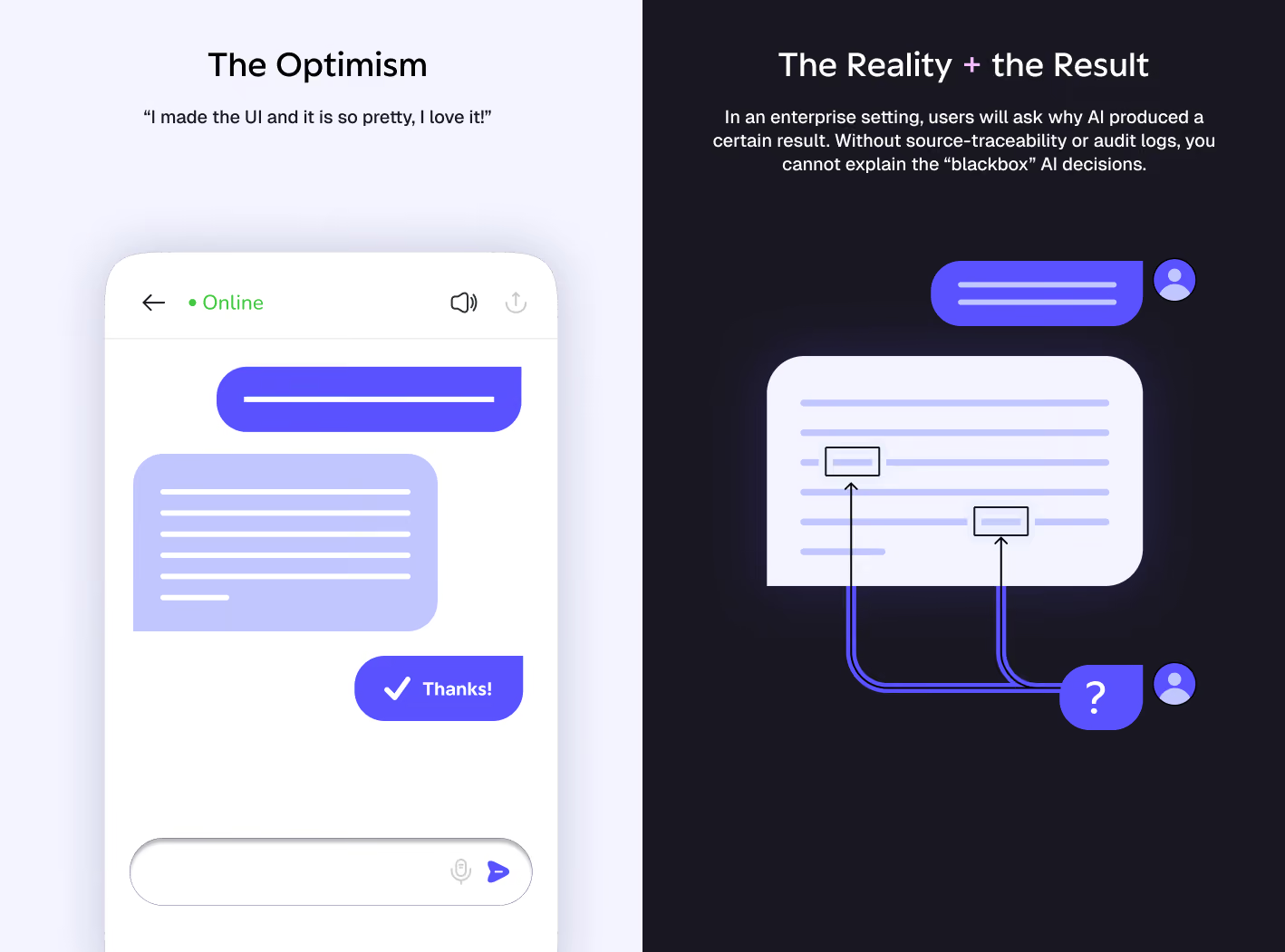
A system reaches high accuracy in testing and goes into production. The underwriter or claims reviewer who depends on its output has no way to tell which extractions are solid and which are quietly wrong. So they do the only safe thing and check all of it. The automation that was supposed to save hours becomes one more screen to verify line by line.
The babysitting problem

This is the gap between accuracy and value, and it is where a great deal of enterprise AI quietly stalls.

Accuracy is a property of the model. Time saved is a property of the workflow, and the workflow only improves if a human can safely skip the outputs that are already correct. A model that returns a single answer for every field, with no signal about which answers to trust, forces an all-or-nothing decision: trust all of it and absorb the hidden errors, or trust none of it and verify everything. In high-stakes work, no one trusts all of it. So they verify everything, and the system becomes something to babysit.

The outcome is an automation that looks successful on an accuracy chart and delivers almost nothing to the people doing the work.

Trust is earned through honesty about uncertainty

The way out is the same thing that earns trust in the new hire. A model has to know what it does not know, and say so.

In high-stakes work, a confident wrong answer is the most expensive kind of error because it hides. In document AI, a confidence signal is the system’s way of showing which outputs are likely reliable and which ones need human review. A clear signal of uncertainty is what lets a reviewer act. When a system can say that ninety-eight of these extractions are high confidence and two need a human, the reviewer knows exactly where to look. The two get careful attention, the ninety-eight move forward, and the automation finally returns real time.

This is why an underwriter or a medical reviewer comes to trust a system that flags its own uncertainty. The message it sends is simple: do not bluff me on information this important. A model that admits the two it is unsure about earns more trust than a model that claims it nailed all hundred.

Why a raw model does not solve this

The instinct is to assume a frontier AI model already provides this. In practice, it does not, at least not in a form a regulated workflow can depend on.

A model can be prompted to rate its own confidence, but that number is produced the same way every other model output is produced, which means it can hallucinate and it drifts from one run to the next. A model that is confidently wrong about an extraction is equally capable of being confidently wrong about how confident it is. Self-reported confidence gives the appearance of a safety signal without the reliability of one. In high-stakes work, that is more dangerous than no signal at all.

Confidence becomes useful only when high confidence reliably means correct and low confidence reliably means check this, held consistently across document types and over time. Producing a signal that behaves that way is real engineering, and it is the part an internal build tends to discover late, after the model is already returning answers that no one can fully trust.

How Studio Makes Confidence Actionable
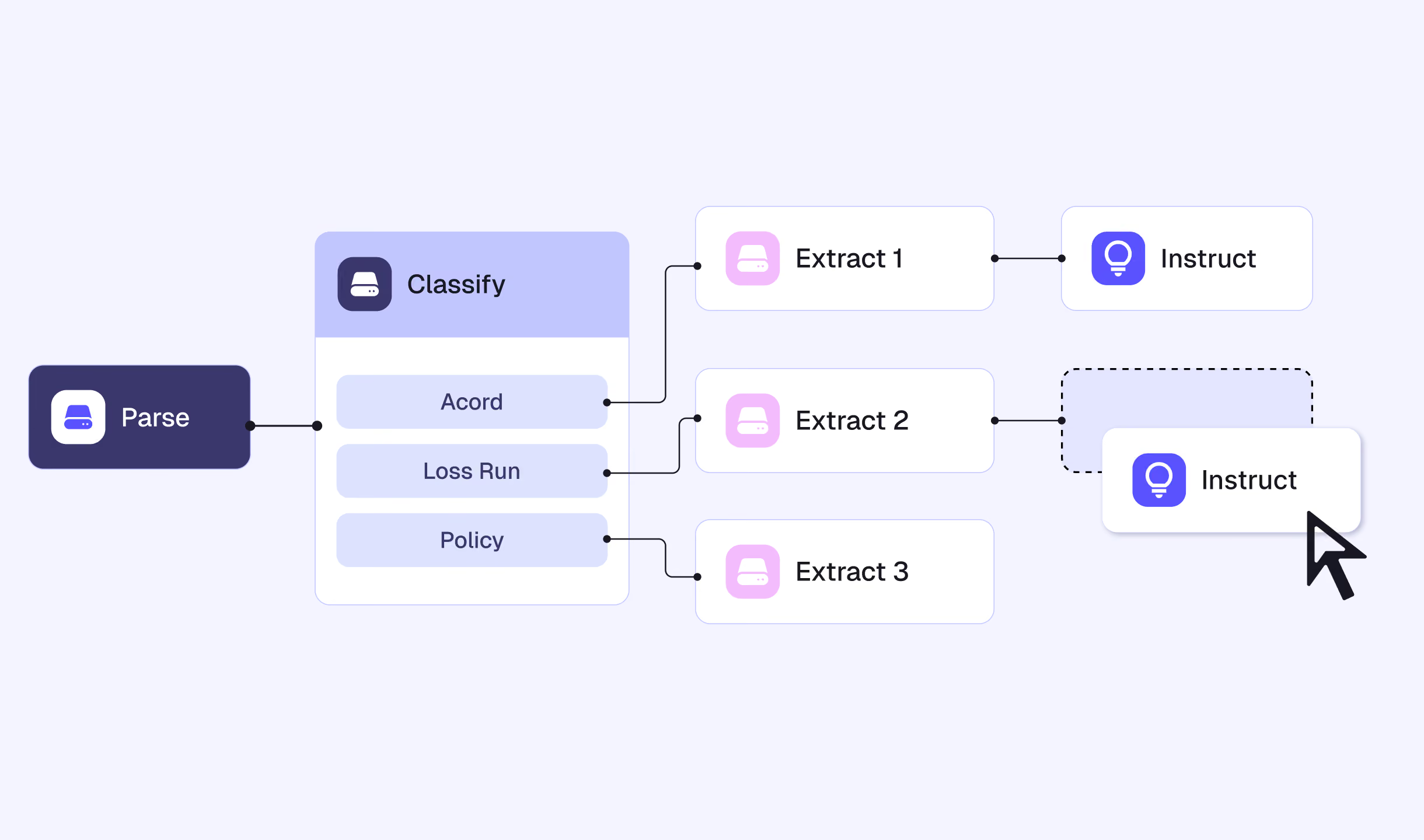
Studio produces a confidence signal at each stage of the pipeline: parse, classify, and extract, on its own. When a result is wrong, the stage-level scores show which step produced the error, so a failure can be traced to its source instead of investigated as one opaque outcome. The same signals make reliability observable across the entire document set, so performance can be monitored as it shifts over time. And because the system keeps learning from review and correction, the share of outputs needing review can shrink as the document set grows.
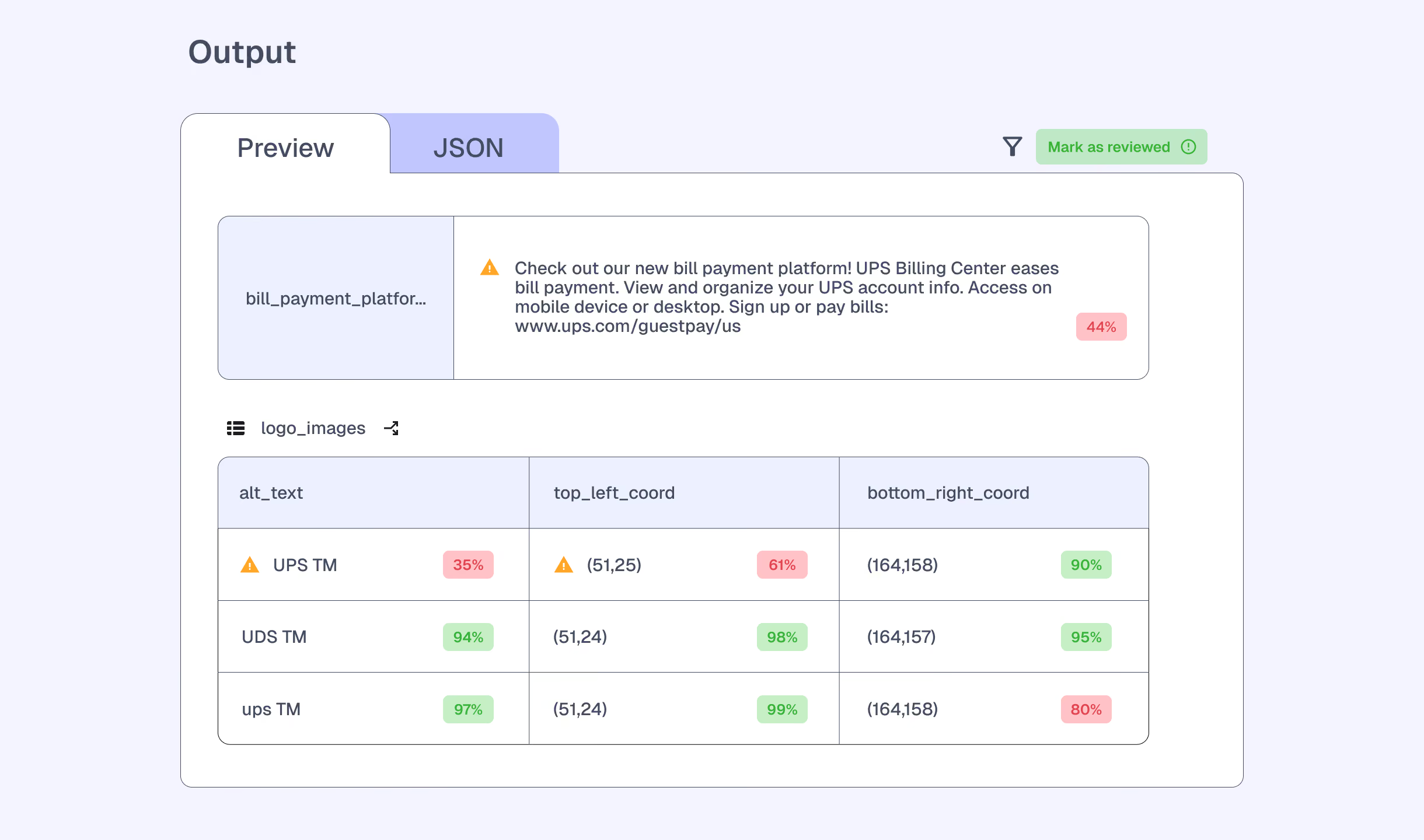
With that foundation, every extraction carries a confidence signal the workflow can act on. High-confidence results flow through, low-confidence results are surfaced for human review, and a reviewer who once checked every output now checks only the small share that genuinely needs a second look. That is what turns high accuracy into real throughput.

That end-to-end transparency is the quality that matters most. A team can see, at every step and over time, how the system performs and where it needs attention, and that visibility is what earns trust in the system as a whole. For work where a quiet error is costly, it is what makes AI deployable at all.

In practice: Amwins, the largest wholesale specialty insurance distributor in the US, cut a manual reconciliation step that had run from 20 minutes to 2 hours per quote down to under 5 minutes, reclaiming roughly 1.5 full-time employees of capacity each week and freeing underwriters for higher-value work. — Amwins case study

The real measure of a document AI system

The question for any high-stakes deployment is not how accurate a model can be on a good day. It is whether the people who depend on it know when to trust it and when to look closer, and whether they can see why. That is the line between an impressive demo and a system an underwriter will actually rely on.

A frontier model can produce an answer. Knowing how far to trust that answer, at every stage and across a changing flow of documents, is the harder problem. It is also what decides whether AI saves time or simply moves the work around.

See how confidence scoring and per-stage transparency work in Upstage Studio, or contact us to walk through the workflow on your own documents.

More in this series

The Trust Problem: Why Document AI Has To Know What It Doesn't Know

Why does document AI trust break down? See how confidence scoring helps reviewers know when to trust an output and when to look closer.

Upstage Team
Upstage Team
Industry
June 16, 2026
The Trust Problem: Why Document AI Has To Know What It Doesn't Know
We build intelligence for the future of work—now it’s your turn.

Start building with our API or talk to our team.

Share

Part 3 of a four-part series on what separates a vibe-coded document AI demo from a system an enterprise can run in production.

By Sam Gobrail, EVP, Solutions and Delivery, and Lucy Park, Co-founder & CPO, Upstage AI

Picture the most capable new hire a team has ever made. Top school, every internship, genuinely sharp. In the first month, the people who have done the work for thirty years still know things the new hire does not, and the new hire knows it too. 

The ones who earn trust fastest are the ones who raise a hand and say, “Here is what I finished, and here is the part I am unsure about.” The ones who lose trust present every answer with the same confidence, including the wrong ones.

Document AI faces the same trust problem, and across enterprises, most deployments fail it for the same reason.

A system reaches high accuracy in testing and goes into production. The underwriter or claims reviewer who depends on its output has no way to tell which extractions are solid and which are quietly wrong. So they do the only safe thing and check all of it. The automation that was supposed to save hours becomes one more screen to verify line by line.

The babysitting problem

This is the gap between accuracy and value, and it is where a great deal of enterprise AI quietly stalls.

Accuracy is a property of the model. Time saved is a property of the workflow, and the workflow only improves if a human can safely skip the outputs that are already correct. A model that returns a single answer for every field, with no signal about which answers to trust, forces an all-or-nothing decision: trust all of it and absorb the hidden errors, or trust none of it and verify everything. In high-stakes work, no one trusts all of it. So they verify everything, and the system becomes something to babysit.

The outcome is an automation that looks successful on an accuracy chart and delivers almost nothing to the people doing the work.

Trust is earned through honesty about uncertainty

The way out is the same thing that earns trust in the new hire. A model has to know what it does not know, and say so.

In high-stakes work, a confident wrong answer is the most expensive kind of error because it hides. In document AI, a confidence signal is the system’s way of showing which outputs are likely reliable and which ones need human review. A clear signal of uncertainty is what lets a reviewer act. When a system can say that ninety-eight of these extractions are high confidence and two need a human, the reviewer knows exactly where to look. The two get careful attention, the ninety-eight move forward, and the automation finally returns real time.

This is why an underwriter or a medical reviewer comes to trust a system that flags its own uncertainty. The message it sends is simple: do not bluff me on information this important. A model that admits the two it is unsure about earns more trust than a model that claims it nailed all hundred.

Why a raw model does not solve this

The instinct is to assume a frontier AI model already provides this. In practice, it does not, at least not in a form a regulated workflow can depend on.

A model can be prompted to rate its own confidence, but that number is produced the same way every other model output is produced, which means it can hallucinate and it drifts from one run to the next. A model that is confidently wrong about an extraction is equally capable of being confidently wrong about how confident it is. Self-reported confidence gives the appearance of a safety signal without the reliability of one. In high-stakes work, that is more dangerous than no signal at all.

Confidence becomes useful only when high confidence reliably means correct and low confidence reliably means check this, held consistently across document types and over time. Producing a signal that behaves that way is real engineering, and it is the part an internal build tends to discover late, after the model is already returning answers that no one can fully trust.

How Studio Makes Confidence Actionable

Studio produces a confidence signal at each stage of the pipeline: parse, classify, and extract, on its own. When a result is wrong, the stage-level scores show which step produced the error, so a failure can be traced to its source instead of investigated as one opaque outcome. The same signals make reliability observable across the entire document set, so performance can be monitored as it shifts over time. And because the system keeps learning from review and correction, the share of outputs needing review can shrink as the document set grows.

With that foundation, every extraction carries a confidence signal the workflow can act on. High-confidence results flow through, low-confidence results are surfaced for human review, and a reviewer who once checked every output now checks only the small share that genuinely needs a second look. That is what turns high accuracy into real throughput.

That end-to-end transparency is the quality that matters most. A team can see, at every step and over time, how the system performs and where it needs attention, and that visibility is what earns trust in the system as a whole. For work where a quiet error is costly, it is what makes AI deployable at all.

In practice: Amwins, the largest wholesale specialty insurance distributor in the US, cut a manual reconciliation step that had run from 20 minutes to 2 hours per quote down to under 5 minutes, reclaiming roughly 1.5 full-time employees of capacity each week and freeing underwriters for higher-value work. — Amwins case study

The real measure of a document AI system

The question for any high-stakes deployment is not how accurate a model can be on a good day. It is whether the people who depend on it know when to trust it and when to look closer, and whether they can see why. That is the line between an impressive demo and a system an underwriter will actually rely on.

A frontier model can produce an answer. Knowing how far to trust that answer, at every stage and across a changing flow of documents, is the harder problem. It is also what decides whether AI saves time or simply moves the work around.

See how confidence scoring and per-stage transparency work in Upstage Studio, or contact us to walk through the workflow on your own documents.

More in this series

Part 3 of a four-part series on what separates a vibe-coded document AI demo from a system an enterprise can run in production.

By Sam Gobrail, EVP, Solutions and Delivery, and Lucy Park, Co-founder & CPO, Upstage AI

Picture the most capable new hire a team has ever made. Top school, every internship, genuinely sharp. In the first month, the people who have done the work for thirty years still know things the new hire does not, and the new hire knows it too. 

The ones who earn trust fastest are the ones who raise a hand and say, “Here is what I finished, and here is the part I am unsure about.” The ones who lose trust present every answer with the same confidence, including the wrong ones.

Document AI faces the same trust problem, and across enterprises, most deployments fail it for the same reason.

A system reaches high accuracy in testing and goes into production. The underwriter or claims reviewer who depends on its output has no way to tell which extractions are solid and which are quietly wrong. So they do the only safe thing and check all of it. The automation that was supposed to save hours becomes one more screen to verify line by line.

The babysitting problem

This is the gap between accuracy and value, and it is where a great deal of enterprise AI quietly stalls.

Accuracy is a property of the model. Time saved is a property of the workflow, and the workflow only improves if a human can safely skip the outputs that are already correct. A model that returns a single answer for every field, with no signal about which answers to trust, forces an all-or-nothing decision: trust all of it and absorb the hidden errors, or trust none of it and verify everything. In high-stakes work, no one trusts all of it. So they verify everything, and the system becomes something to babysit.

The outcome is an automation that looks successful on an accuracy chart and delivers almost nothing to the people doing the work.

Trust is earned through honesty about uncertainty

The way out is the same thing that earns trust in the new hire. A model has to know what it does not know, and say so.

In high-stakes work, a confident wrong answer is the most expensive kind of error because it hides. In document AI, a confidence signal is the system’s way of showing which outputs are likely reliable and which ones need human review. A clear signal of uncertainty is what lets a reviewer act. When a system can say that ninety-eight of these extractions are high confidence and two need a human, the reviewer knows exactly where to look. The two get careful attention, the ninety-eight move forward, and the automation finally returns real time.

This is why an underwriter or a medical reviewer comes to trust a system that flags its own uncertainty. The message it sends is simple: do not bluff me on information this important. A model that admits the two it is unsure about earns more trust than a model that claims it nailed all hundred.

Why a raw model does not solve this

The instinct is to assume a frontier AI model already provides this. In practice, it does not, at least not in a form a regulated workflow can depend on.

A model can be prompted to rate its own confidence, but that number is produced the same way every other model output is produced, which means it can hallucinate and it drifts from one run to the next. A model that is confidently wrong about an extraction is equally capable of being confidently wrong about how confident it is. Self-reported confidence gives the appearance of a safety signal without the reliability of one. In high-stakes work, that is more dangerous than no signal at all.

Confidence becomes useful only when high confidence reliably means correct and low confidence reliably means check this, held consistently across document types and over time. Producing a signal that behaves that way is real engineering, and it is the part an internal build tends to discover late, after the model is already returning answers that no one can fully trust.

How Studio Makes Confidence Actionable

Studio produces a confidence signal at each stage of the pipeline: parse, classify, and extract, on its own. When a result is wrong, the stage-level scores show which step produced the error, so a failure can be traced to its source instead of investigated as one opaque outcome. The same signals make reliability observable across the entire document set, so performance can be monitored as it shifts over time. And because the system keeps learning from review and correction, the share of outputs needing review can shrink as the document set grows.

With that foundation, every extraction carries a confidence signal the workflow can act on. High-confidence results flow through, low-confidence results are surfaced for human review, and a reviewer who once checked every output now checks only the small share that genuinely needs a second look. That is what turns high accuracy into real throughput.

That end-to-end transparency is the quality that matters most. A team can see, at every step and over time, how the system performs and where it needs attention, and that visibility is what earns trust in the system as a whole. For work where a quiet error is costly, it is what makes AI deployable at all.

In practice: Amwins, the largest wholesale specialty insurance distributor in the US, cut a manual reconciliation step that had run from 20 minutes to 2 hours per quote down to under 5 minutes, reclaiming roughly 1.5 full-time employees of capacity each week and freeing underwriters for higher-value work. — Amwins case study

The real measure of a document AI system

The question for any high-stakes deployment is not how accurate a model can be on a good day. It is whether the people who depend on it know when to trust it and when to look closer, and whether they can see why. That is the line between an impressive demo and a system an underwriter will actually rely on.

A frontier model can produce an answer. Knowing how far to trust that answer, at every stage and across a changing flow of documents, is the harder problem. It is also what decides whether AI saves time or simply moves the work around.

See how confidence scoring and per-stage transparency work in Upstage Studio, or contact us to walk through the workflow on your own documents.

More in this series

The 90-Day path to Underwriting Reinvention

See how Fortune 500 companies eliminate the bottleneck where 70% of submissions arrive incomplete.
1,000+
Submissions Analyzed
90
Days to Transform

Download the White Paper

Thank you! Your submission has been received!
Oops! Something went wrong while submitting the form.